 (1).png)
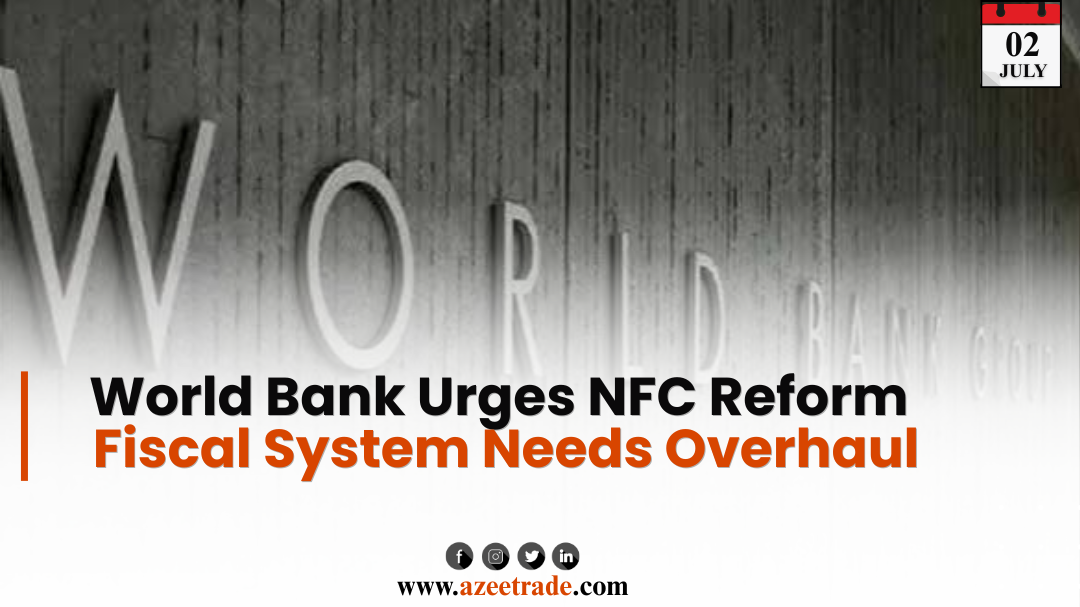
The World Bank has called for comprehensive reforms to Pakistan's fiscal federalism framework, warning that the current National Finance Commission (NFC) arrangement has created a persistent structural imbalance between revenue generation and public spending responsibilities.
In its report, "Strengthening Fiscal Federalism in Pakistan," the World Bank stated that while the 18th Constitutional Amendment and the 7th NFC Award significantly expanded provincial autonomy by devolving key public service responsibilities, the supporting financing and institutional mechanisms have not evolved at the same pace.
According to the report, these structural weaknesses have weakened fiscal discipline, constrained revenue mobilisation, and affected the efficiency and quality of public service delivery across the country.
The World Bank noted that the reverse grants proposed in the FY2026-27 federal budget could help partially address the existing vertical fiscal imbalance between the federal and provincial governments. However, it emphasized that broader institutional reforms remain necessary to establish a more sustainable and balanced fiscal framework.
The report highlighted that the federal budget projects reverse grants of more than Rs546 billion from Punjab and approximately Rs260 billion from Sindh under Article 164 of the Constitution. No corresponding amounts were reflected in the published budget documents of Khyber Pakhtunkhwa and Balochistan.
Overall, the federal government has estimated receipts from provinces amounting to Rs1.035 trillion for FY2026-27.
The World Bank also recommended strengthening provincial tax collection, improving revenue mobilisation, aligning expenditure responsibilities with available resources, and empowering local governments to enhance service delivery and fiscal accountability.
According to the institution, implementing these reforms would improve Pakistan's public financial management, strengthen intergovernmental fiscal coordination, and support long-term macroeconomic stability.



















































-falls-to-rs43.57tr)




































































































-rises-to-rs44.35-trillion)



















-surges-to-rs44.23-trillion-as-bank-deposits-jump)





















































-falls-weekonweek-to-rs40.95tr)






























































































































































-ltd-reports-strong-halfyearly-results-–-profit-surged)























































































)














Add a comment